Where our jamón comes from
A jamón ibérico is not born in a workshop. It is born under oak trees, in the low light of late autumn, where a black pig has been looking for its acorns for centuries. What you taste at the counter is that ground — its altitude, its wind, its patience. Change region, and everything changes with it.
The regions of jamón ibérico, on the map
Four regions of Spain make jamón ibérico. Each has its dehesa, its altitude, its air — and its own way of taking time. Two of them are ours.
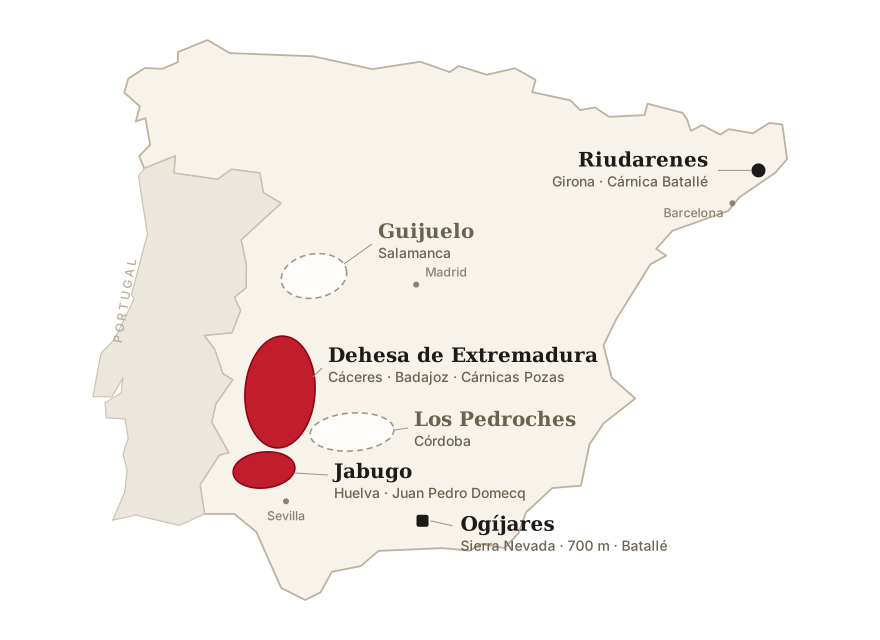
In red, the two regions we work with.
Dotted, the two regions we do not carry yet.
In black, Cárnica Batallé: Riudarenes in Catalonia, and Ogíjares at the foot of the Sierra Nevada where its hams are cured.
Our two regions
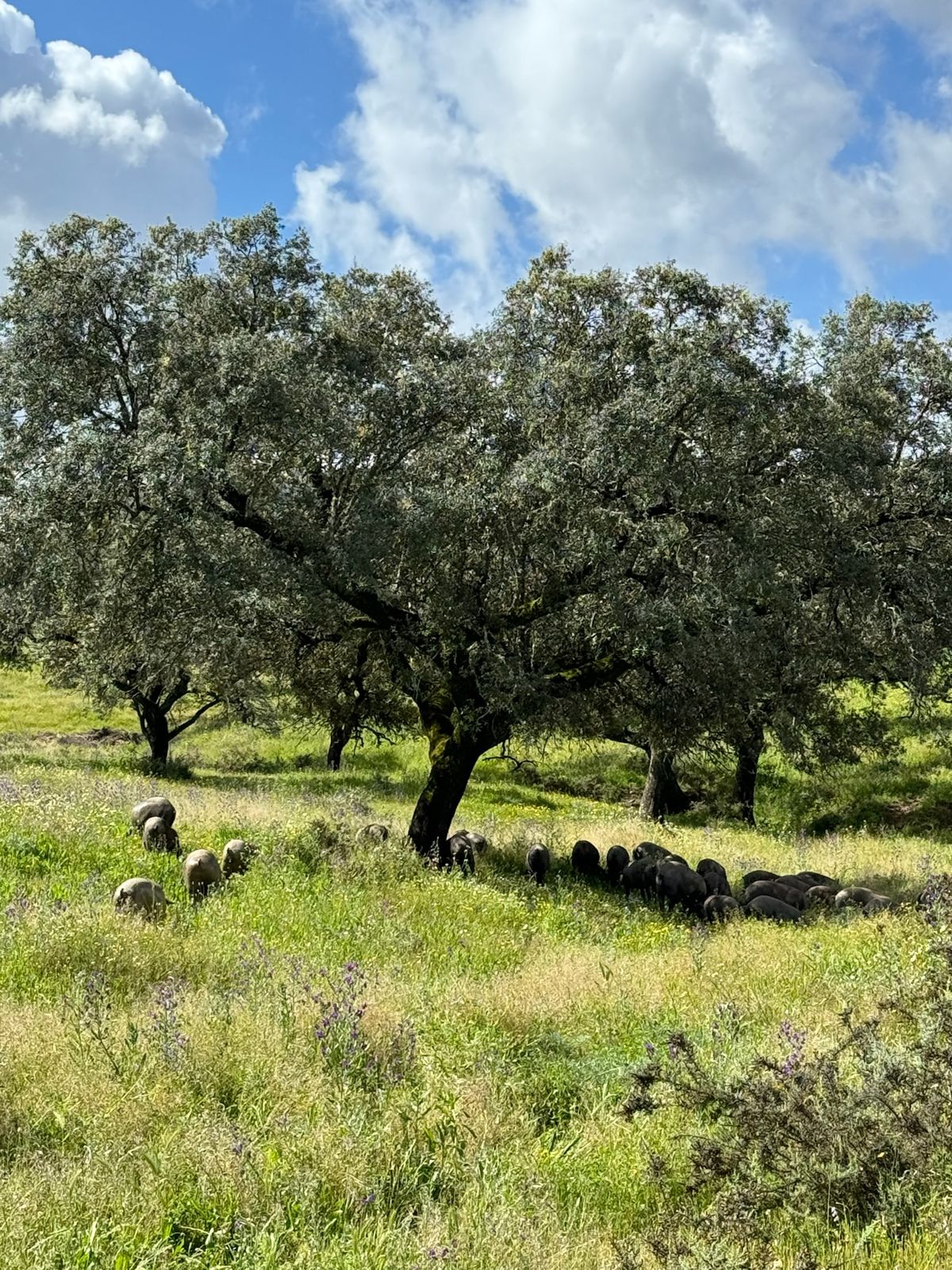
Dehesa de Extremadura
Cáceres and Badajoz · 85 municipalities
The widest of the four. Horizons of oak that never quite end, a winter that bites without freezing, a summer that warms without burning. Nothing here is extreme, and the ham takes after it: less salt, juicy, long on the palate.
One million two hundred thousand pieces are born here every year, across more than sixty producers. From October to March the pig walks: the oaks stand far enough apart that acorns have to be looked for, and it is that walking that builds the fat. Cárnicas Pozas cures in the Ambroz valley, well beyond the legal minimum — 26, 30 or 36 months depending on the grade.
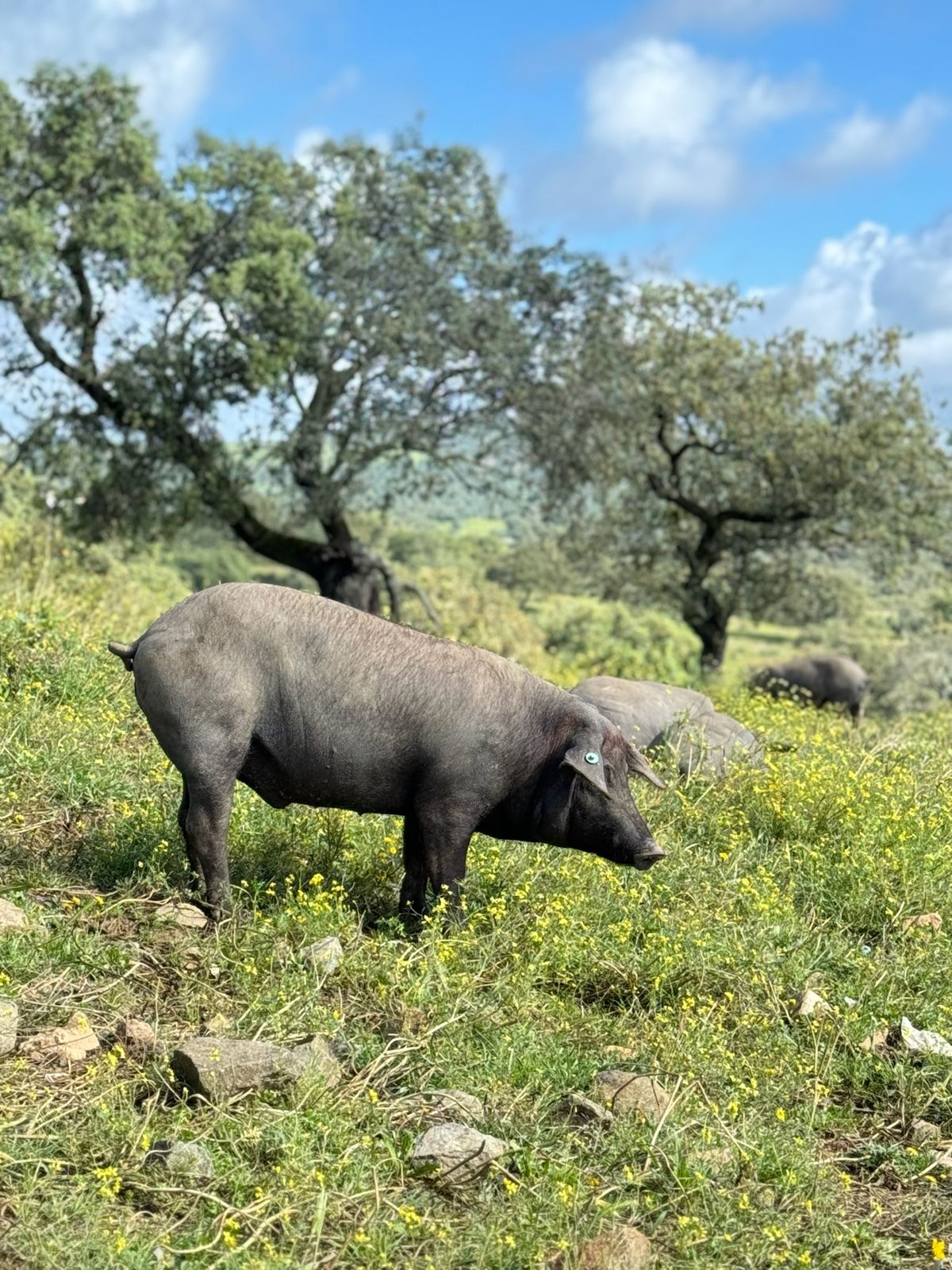
Jabugo
Huelva · Sierra de Aracena · approx. 660 m
Here the mountain meets the Atlantic. The damp rises off the ocean and never really falls back — between 65 and 80 %, all year round. The hams do not so much dry as soften: the most intense of the four, the saltiest too, with a fat that melts before it reaches the tongue.
Six hundred and sixty metres up, sierras running down to the Portuguese border. Juan Pedro Domecq raises and cures here, and its 100 % Ibérico de Bellota — the only grade entitled to the name Pata Negra — spends forty-two months in that air before it reaches us.
Two more lands belong in this story. We do not carry them yet, but jamón ibérico cannot be told without them.
Guijuelo
Salamanca · approx. 1,000 m
A thousand metres above the sea, a dry cutting winter, a summer that passes quickly. Altitude does the work the salt would otherwise do: lightly salted, melting, with notes of hazelnut and butter.
Los Pedroches
Northern Córdoba · 32 municipalities
The smallest and the quietest: fifty thousand pieces a year, twenty-four times fewer than Extremadura. Granite soil, a tempered Mediterranean climate, a profile that stays mild and faintly sweet, fruity and toasted.
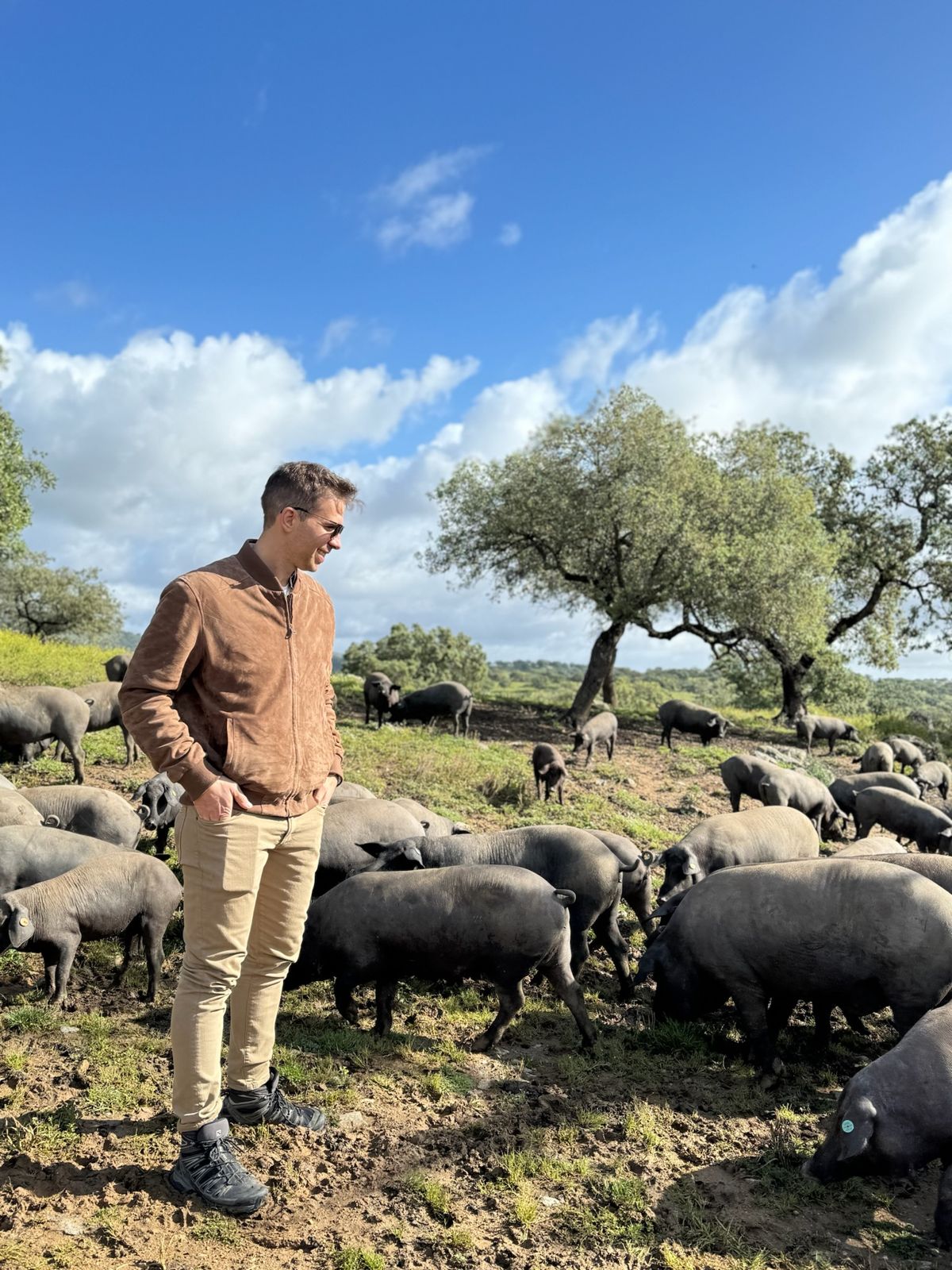
Huelva, the home ground of Pata Negra
A village of two thousand one hundred and eighty-three people gave its name to a whole region. In 2017 Spain and the European Union placed the word Jabugo under legal protection: it had become, in the words of the regulation, synonymous with distinctive quality on the national and international market. A village name now outweighs the name of a province.
Only thirty-one municipalities may dry under that name, in what the Spanish texts call the singular microclimatic conditions of the sierra of Huelva. Not a marketing phrase: a humidity, an altitude, and the time it takes for the air to do its work.
Our Pata Negra comes from that sierra, from Juan Pedro Domecq. Forty-two months of mountain air, then a knife, a board, and the counter on Rue Michelle-Nicod.
Sources: the official Spanish texts on the ham of the sierra of Huelva (Ministry of Agriculture) and the 2017 European regulation.
Our three houses
We import ourselves, which means we choose a house and not a catalogue. Three families, three regions, and for each of them one thing they do better than anything we have tasted elsewhere.
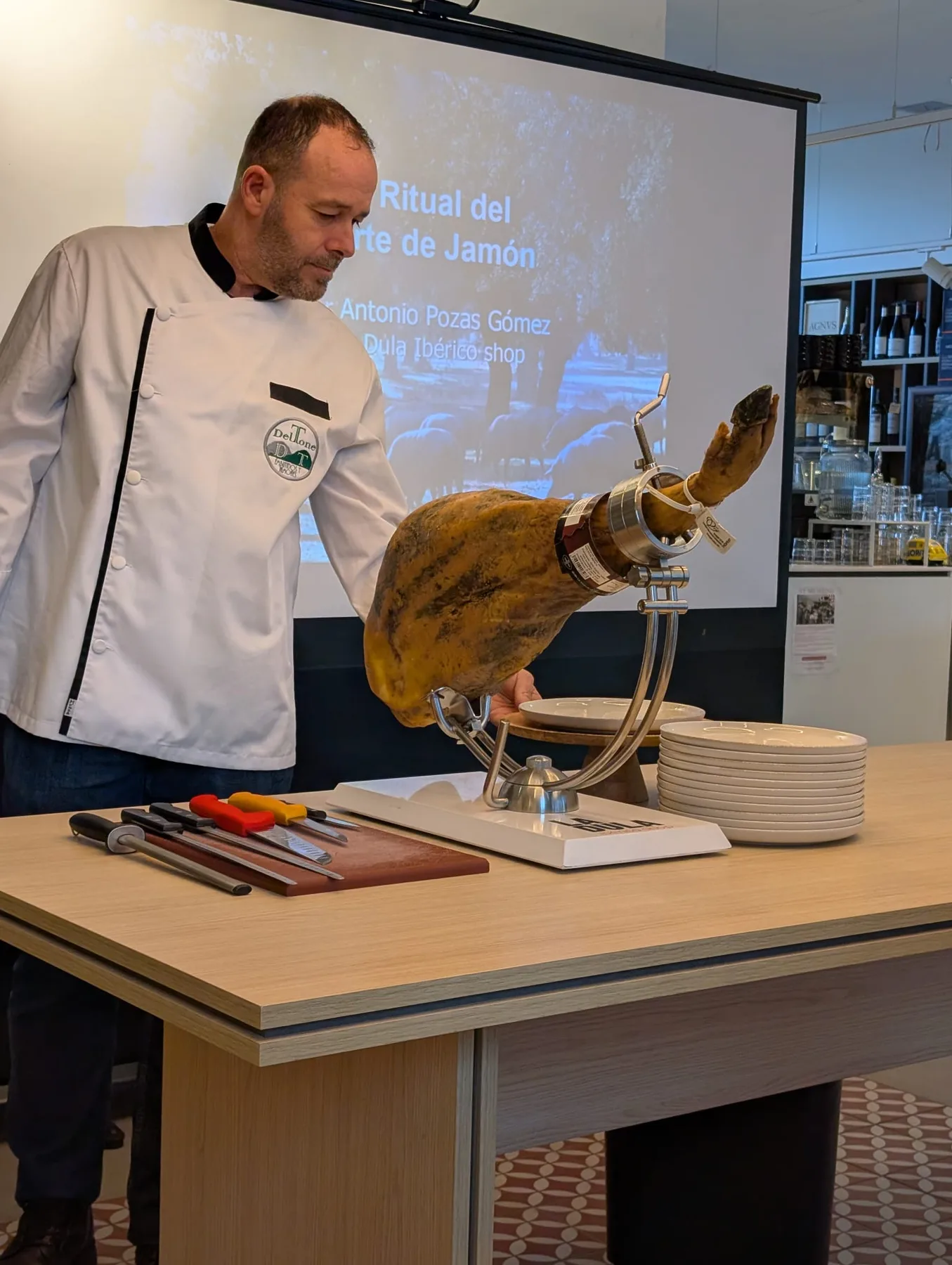
Cárnicas Pozas
Baños de Montemayor · Ambroz valley · Extremadura
What we buy here: jamón and paleta ibérico in Cebo, Cebo de Campo and Bellota, and the cured charcuterie that goes with them.
Curing held well beyond the legal minimum: 26 months for the Cebo jamón, 30 for the Cebo de Campo, 36 for the Bellota. In this house, time is not a constraint but a method.
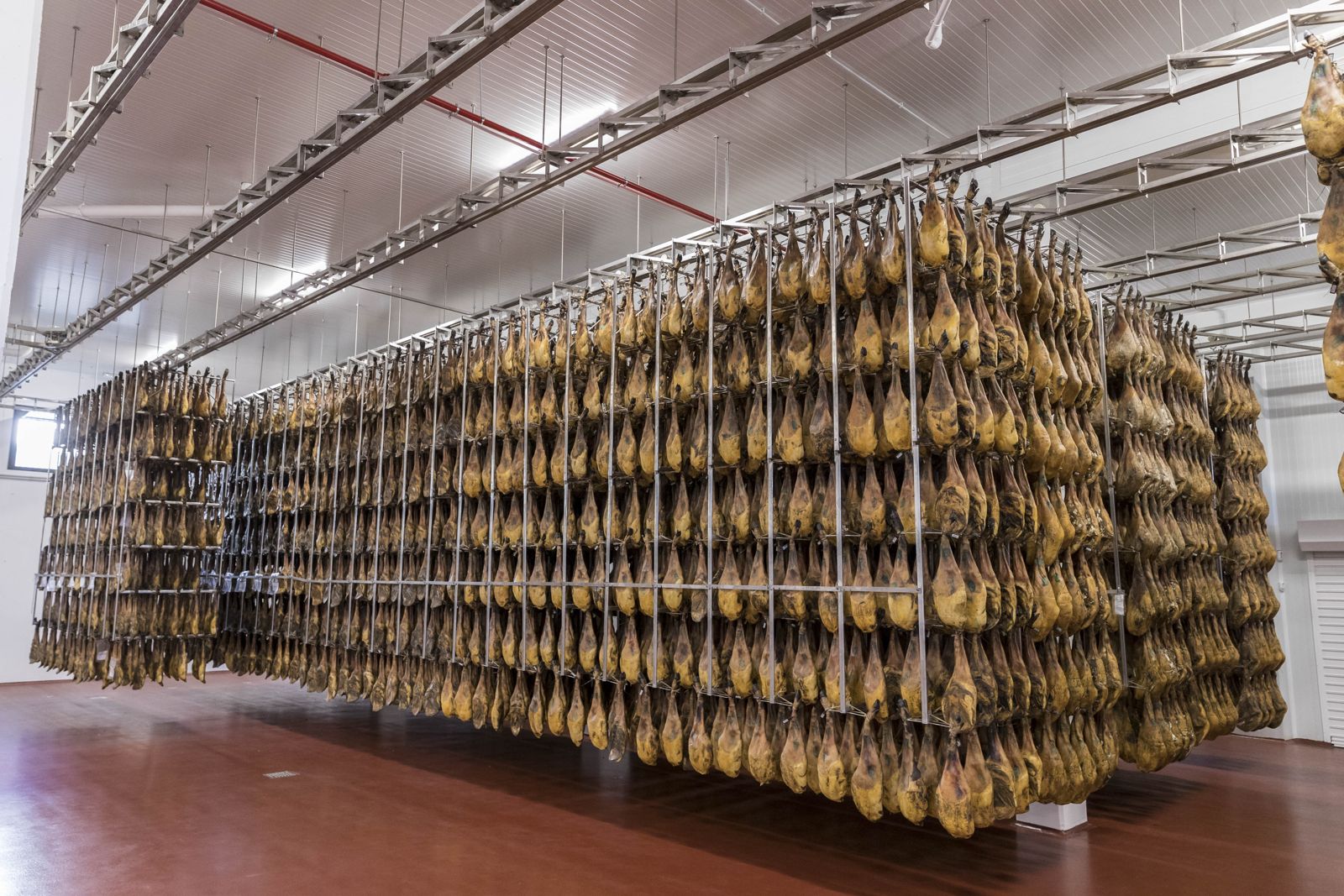
Juan Pedro Domecq
Province of Huelva · Andalusia · established 1978
What we buy here: the 100 % Ibérico de Bellota, the only grade entitled to be called Pata Negra, in jamón and in paleta.
Forty-two months of curing for the jamón. This is the house that carries the top of our range, and it carries it without hurrying.
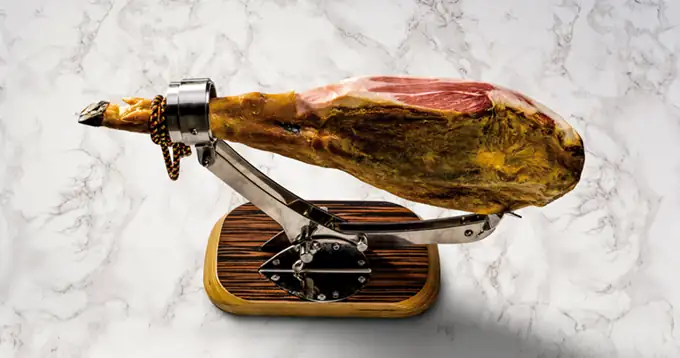
Cárnica Batallé
Riudarenes, Girona · cured in Ogíjares, Granada · founded 1974
What we buy here: Duroc jamón only. Not taking the paleta is our own choice, not a limit of the house.
The hams leave Catalonia to dry at Ogíjares, at the foot of the Sierra Nevada, above seven hundred metres. Cold dry mountain air, a long slow drying: that is where this jamón finds its character. Duroc is the one breed Spanish law allows to be crossed with the Iberian pig, and it has its place on our counter.
Why more than one region
The region does not only decide how the ham dries. It decides the life of the pig: how densely the oaks stand, how far the dehesa runs, how long the montanera lasts, how many kilometres an acorn is worth.
Buying everything from a single house would be simpler and cheaper. It would also mean offering one drying style and calling it the whole of Spain.
Three regions means three airs, three levels of salt, three textures on the same board — and a guest who tastes the difference instead of being told about it.
Compare the four gradesEverything about jamón ibéricoSee the range