Understanding
Everything you need to know about jamón ibérico
We import the full Iberian range from Spain ourselves and slice it in Geneva. Along the way we have answered the same questions thousands of times. They are all gathered here, from the one that matters most — which one is for me — to the meaning of a word on a label.
Five ways in
Start wherever you like. Each one links to the others, and to the products they talk about.
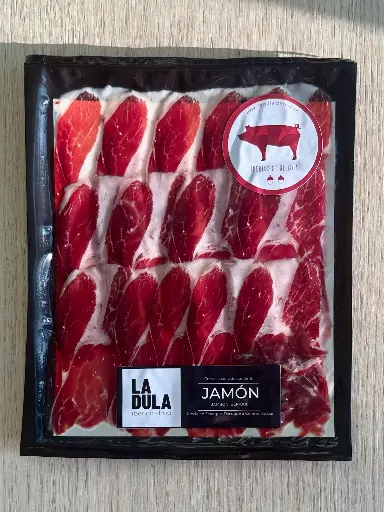
Decide
Which jamón ibérico to choose
Cebo, Cebo de Campo, Bellota, Pata Negra: what separates the four grades, what each one tastes like, and what a kilo actually costs.
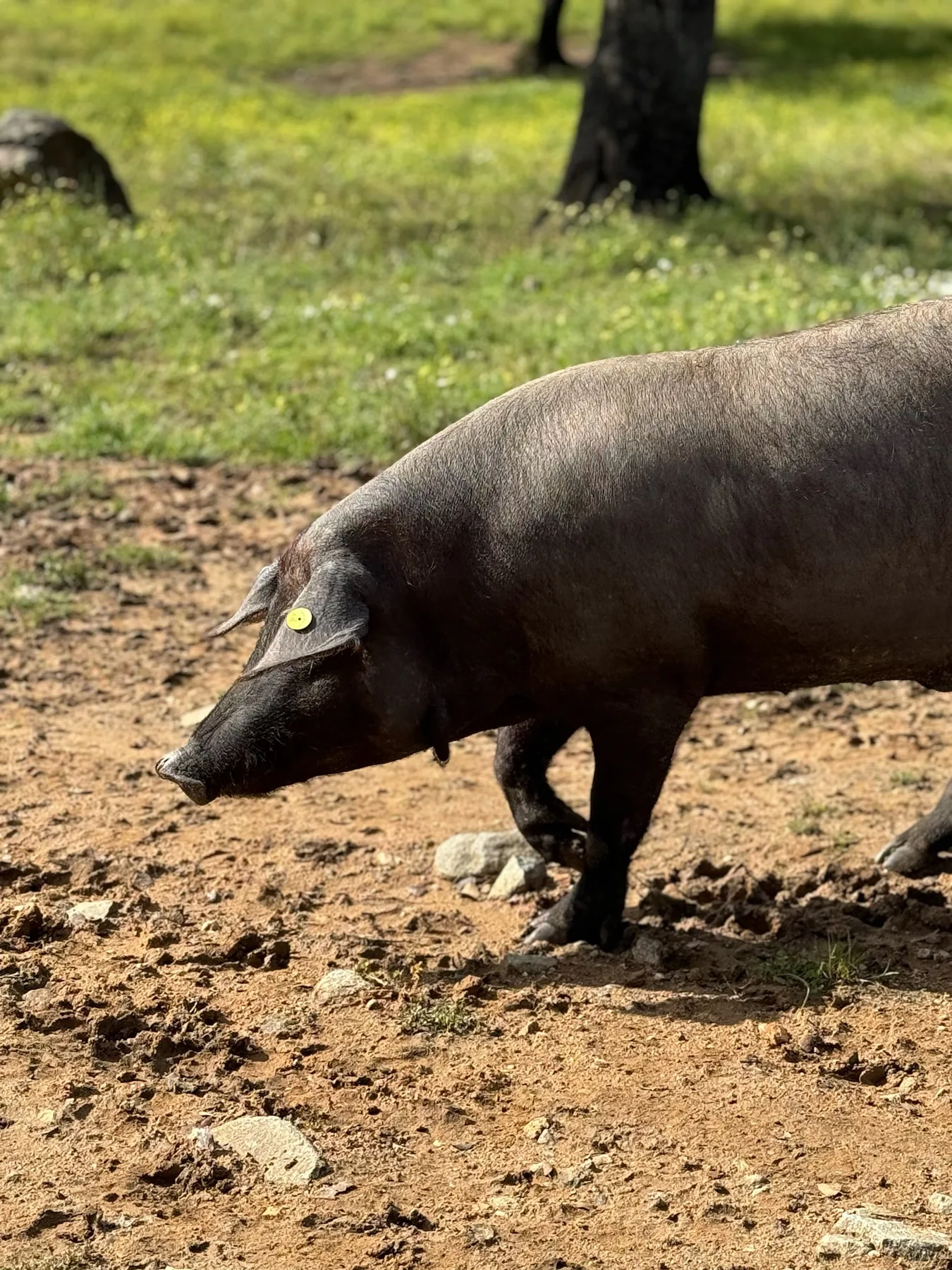
Understand
The connoisseur guide
Breeds and crossings, rearing in the dehesa, the montanera, and what each label colour actually guarantees.
Look it up
The jamón ibérico glossary
Bellota, montanera, dehesa, Jabugo, D.O.P. Every word on a label, explained in one line.
Practical
Questions we are asked every day
How to store it, how to serve it, jamón or paleta, delivery in Switzerland, and where to buy in Geneva.
Experience
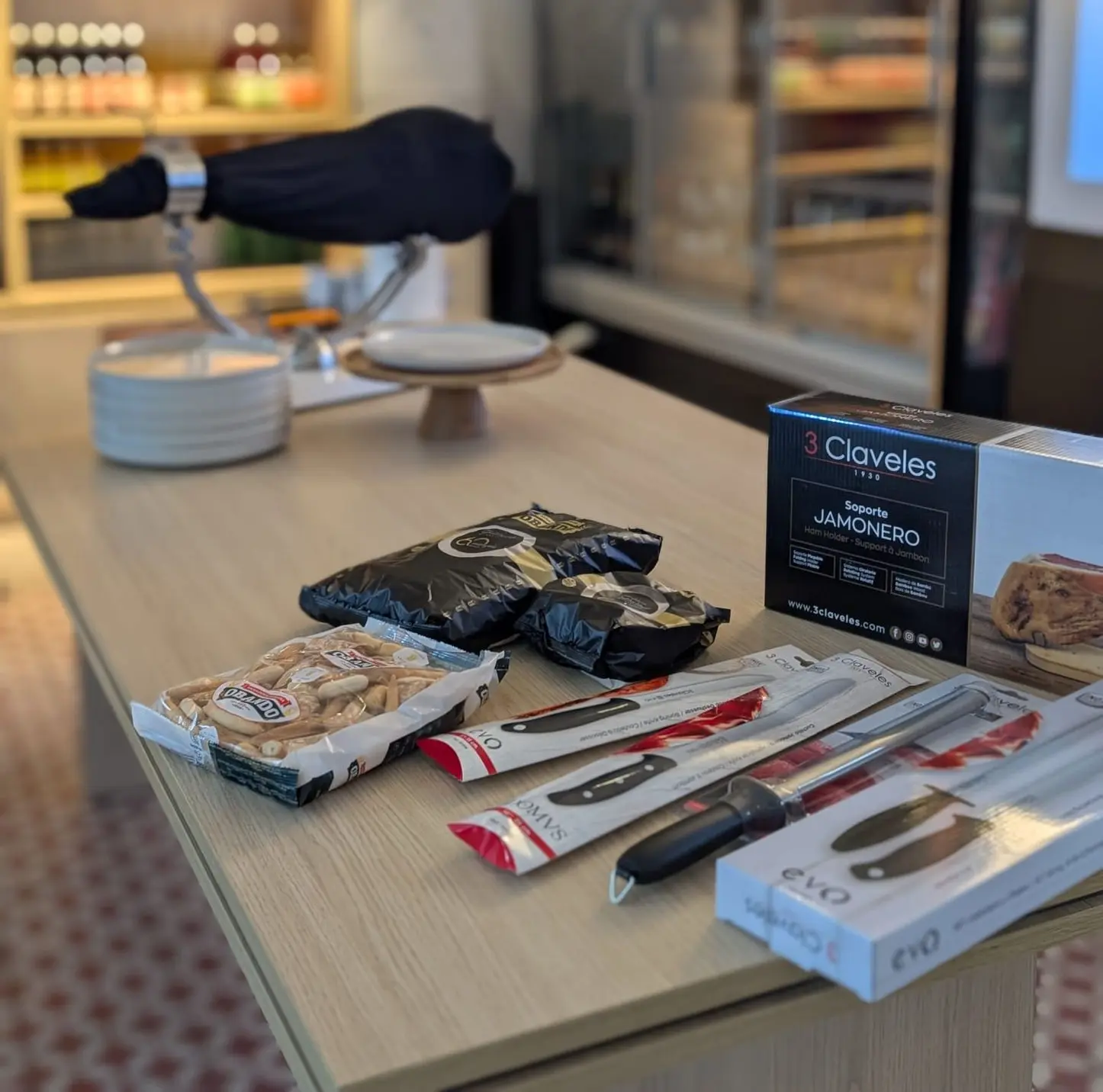
The carving masterclass
Two hours with a knife in your hand, in our Geneva shop. You leave knowing how to open a whole piece.
The essentials, in two minutes
Four grades, one classification
Spanish law recognises four grades of Iberian ham, identified by the colour of the seal on the piece: white for Cebo, green for Cebo de Campo, red for Bellota and black for the 100 % Ibérico de Bellota, the only one entitled to the name Pata Negra. Two things separate them: the breed of the pig, then what it eats. The full comparison is here.
Jamón and paleta, the same four grades
The jamón is the hind leg, the paleta the front one. Same pig, same classification, same four seals — but the paleta is smaller, cures faster and costs less. It is the honest way into the range. See the paletas.
Curing: the law, and what our producers do
Spanish law sets a minimum by the weight of the piece, not by the colour of the seal: 24 months for a jamón of 7 kg or more, 20 months below that, 12 months for any paleta. Cárnicas Pozas and Juan Pedro Domecq, the two houses we buy from, go well beyond — from 26 months for a Cebo to 42 for a Pata Negra.
Whole piece or sliced
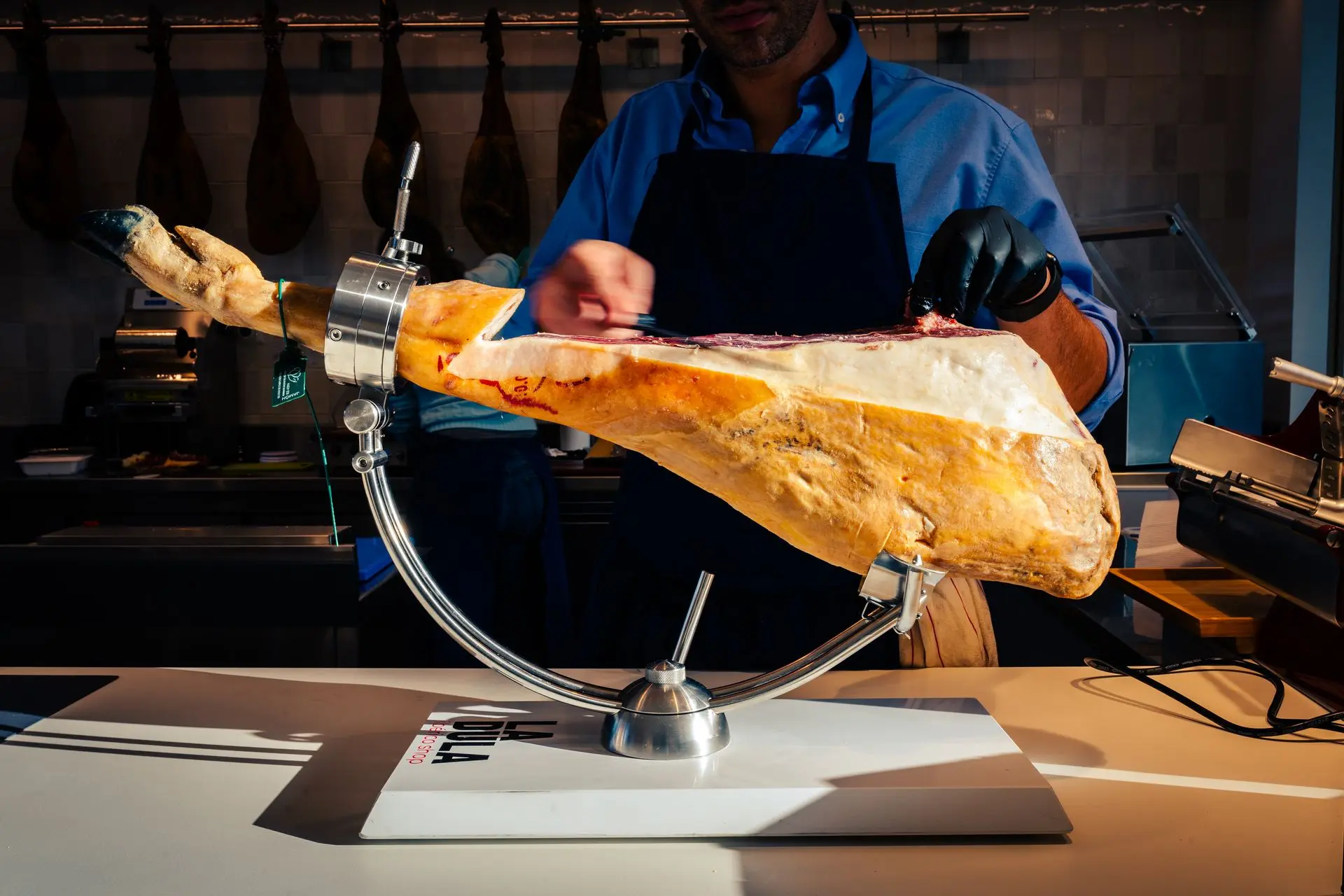
A whole bone-in piece keeps for months and rewards anyone willing to carve. Sliced to order and vacuum-packed, it is ready in five minutes for an aperitif. We do both, and we slice in the shop, in front of you. The practical questions are answered here.
Reading is good. Tasting is better.
Everything on this page exists because someone asked us in the shop. Come and ask in person: rue Michelle Nicod 6 in Geneva, we open a piece and let you compare.