The connoisseur guide
Breeds, rearing and labels of jamón ibérico
Pata Negra, Bellota, Cebo de Campo, D.O.P... These words appear on every jamón ibérico label — but what do they actually guarantee? Too often, an ordinary ham is sold at the price of a vintage wine, for lack of clear benchmarks. At LA DULA, we'd rather arm you with real knowledge than a marketing pitch: here are the breeds, the rearing methods and the official classifications that separate a good jamón from an exceptional one.
The houses we buy from
We buy from three houses, and three only. We go and see them. We know where every piece we sell comes from.
We import into Switzerland ourselves. No middleman, and full traceability from the farm to the counter.
Juan Pedro Domecq, Huelva. Our 100 % Ibérico de Bellota, black label, jamón and paleta.
Cárnicas Pozas, Extremadura. Our Cebo, Cebo de Campo and Bellota, jamón and paleta, and all our Iberian charcuterie.
Batallé
Batallé, Sierra Nevada. Our 100 % Duroc jamón, milder and heavily marbled.
Three houses, four grades, eight official varieties between jamón and paleta. We carry them all.
The breed, and what it changes
Everyone has heard of Pata Negra. Fewer people know that an Iberian pig is not necessarily a pure one.
Spanish law allows crossing with the Duroc. A 100 % Iberian pig has two Iberian parents; a 50 % pig has an Iberian mother and a Duroc father. The crossing changes the taste, the way the fat sits in the muscle, and how the animal is raised. Our range is 50 % and 100 %.
The three crossings allowed in Spain:
100 % Ibérico
Iberian share
75 % Ibérico
Iberian share
50 % Ibérico
Iberian share
The Iberian pig, a treasure of the peninsula
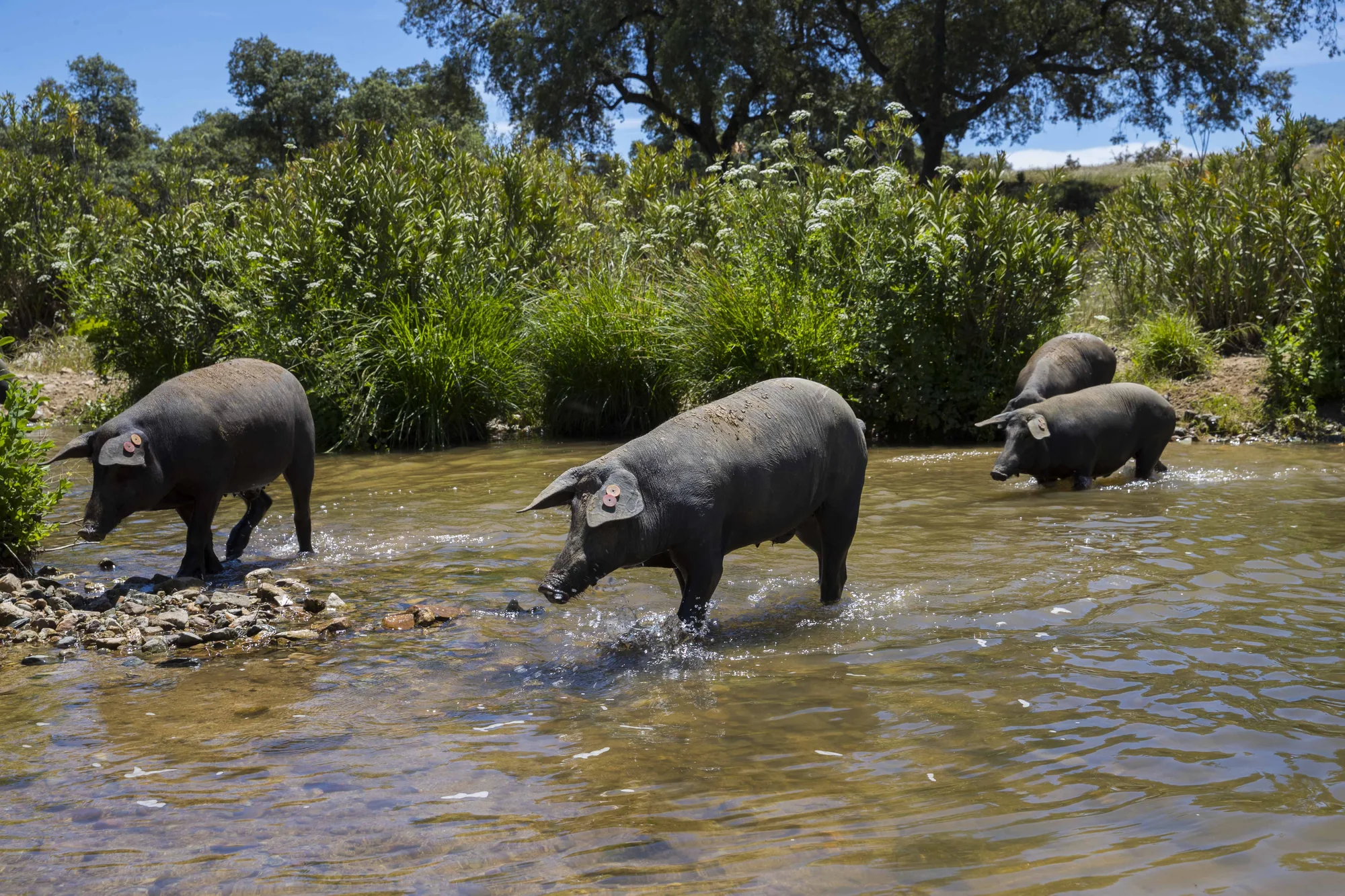
The Iberian pig is native to the peninsula: slender, with the dark trotters that gave it its nickname. Except for the Cebo, it lives in the dehesa, an oak ecosystem shared between Spain and Portugal.
Pata negra means black trotter. The name is now reserved for 100 % Iberian acorn-fed pigs, the ones that carry the black label.
The Duroc, ally of the Iberian
The Duroc is a black pig raised all over the world. In Spain it is crossed with the Iberian for its flesh and for the way it marbles with time.
A 100 % Duroc ham is good. It is milder and less complex than an Iberian one. We sell it, and we say so.
And everything else, which is not ibérico
Spain also produces a great deal of white-pig ham, sold as serrano, often with the words Reserva or Gran Reserva. Those words say nothing about the breed.
They are other products, at other prices. The rearing and curing rules have nothing to do with the Iberian ones.
What the pig eats
Diet is the second factor, after the breed. Spain sorts it into three categories.
De Cebo — farm rearing, cereals and legumes. Slaughter at 10 months minimum.
De Cebo de Campo — at least 60 days in the dehesa, on pasture, natural resources and cereals. Slaughter at 12 months minimum.
De Bellota — free range in the dehesa, acorns for at least 60 days before curing. Slaughter at 14 months minimum.
Same pig, another life. That is what separates a Cebo from a Bellota.
The acorn, the not-so-secret ingredient
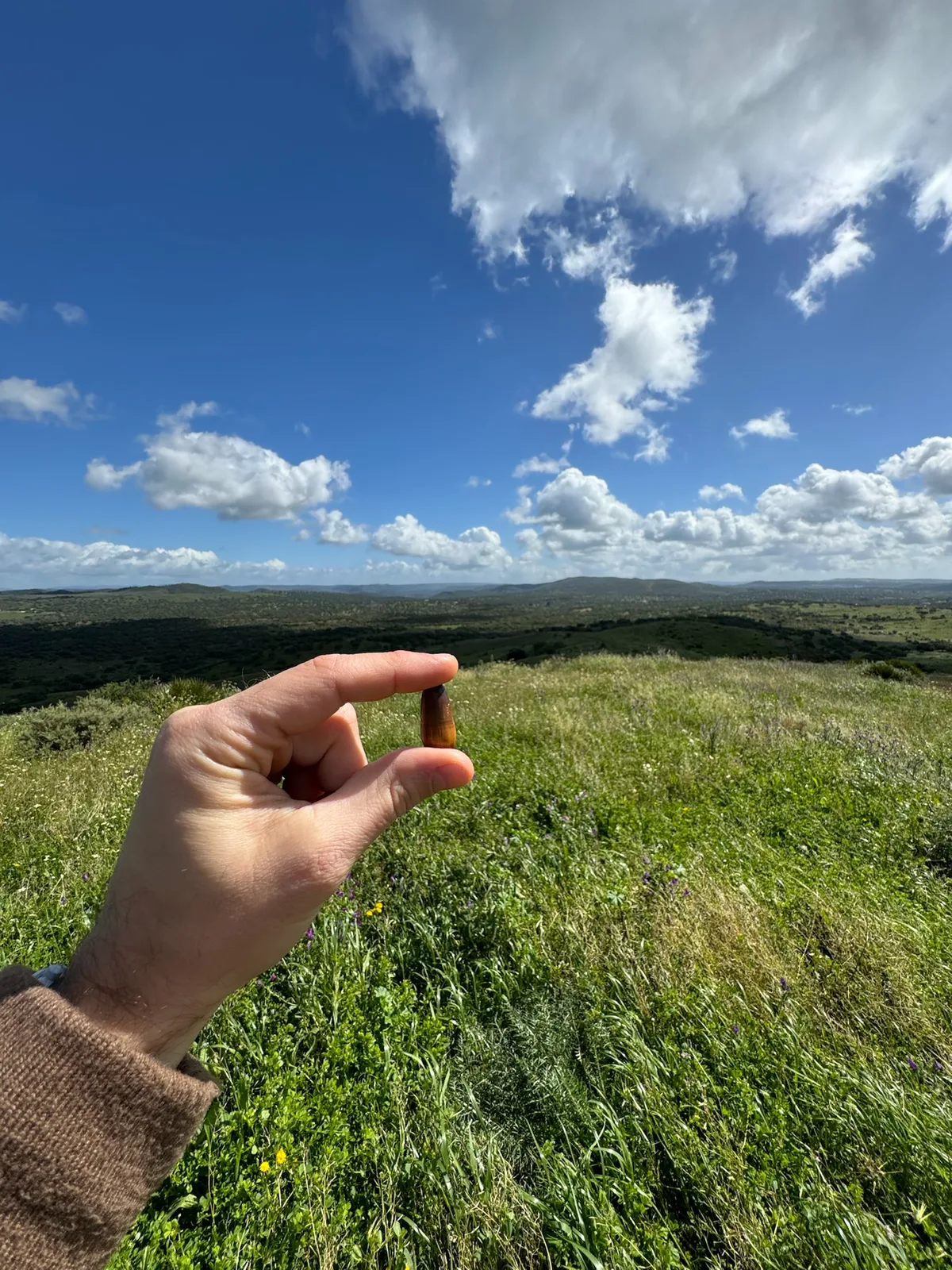
The dehesa is a hard place to live, and that is exactly what makes it good for raising pigs. The animal spends its days looking for acorns — bellotas — rich in natural fatty acids. That diet is what gives jamón its infiltrated fat and its hazelnut notes.
A 100 % Iberian acorn-fed pig spends the montanera, October to February, walking the dehesa to find them.
Not all of them get to. Some are given acorns and cereals; others never taste an acorn and are fed on grain alone.
Look at the colour of the label before you order. It tells you which one you are buying.
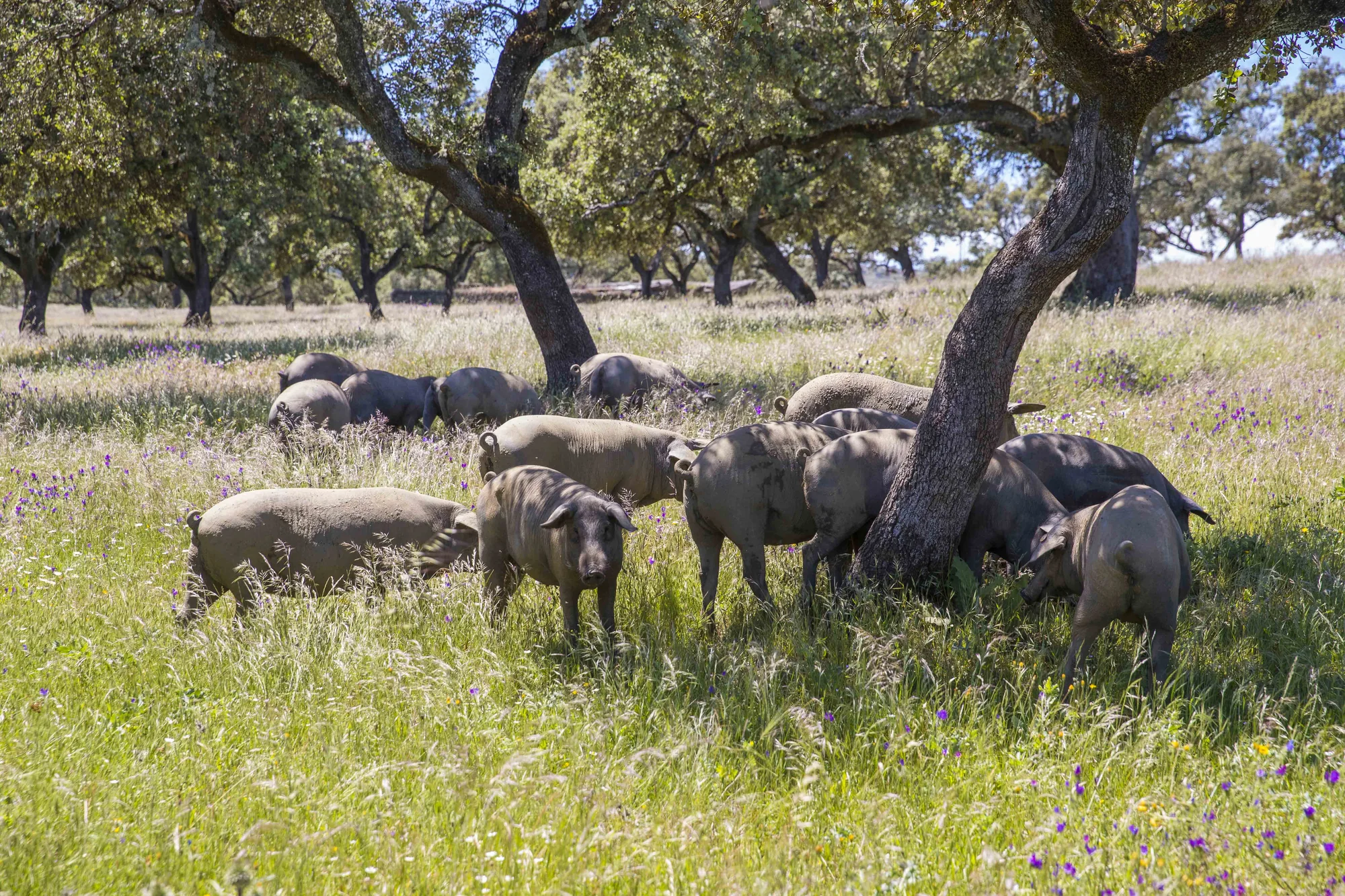
The montanera
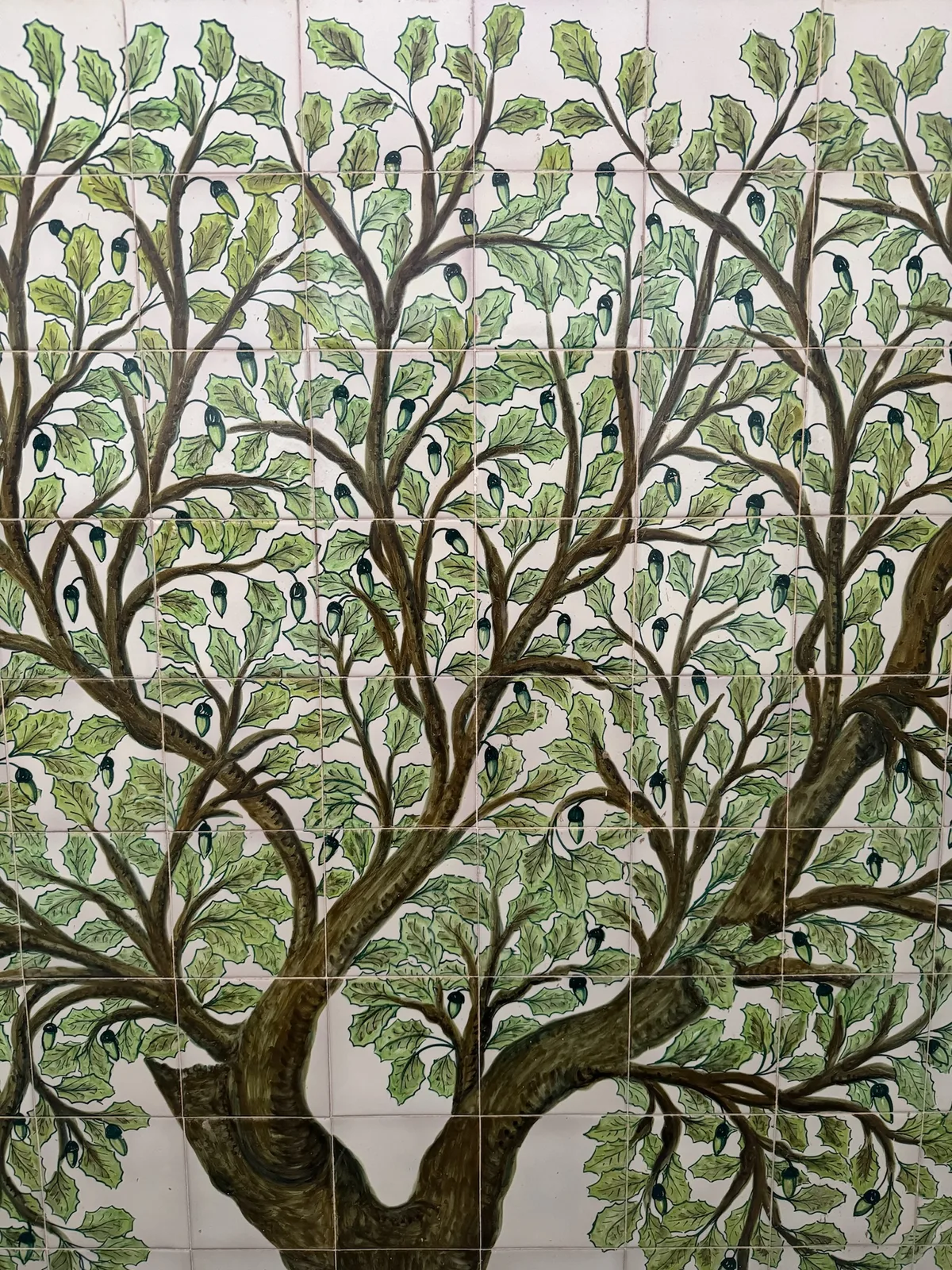
The holm oak
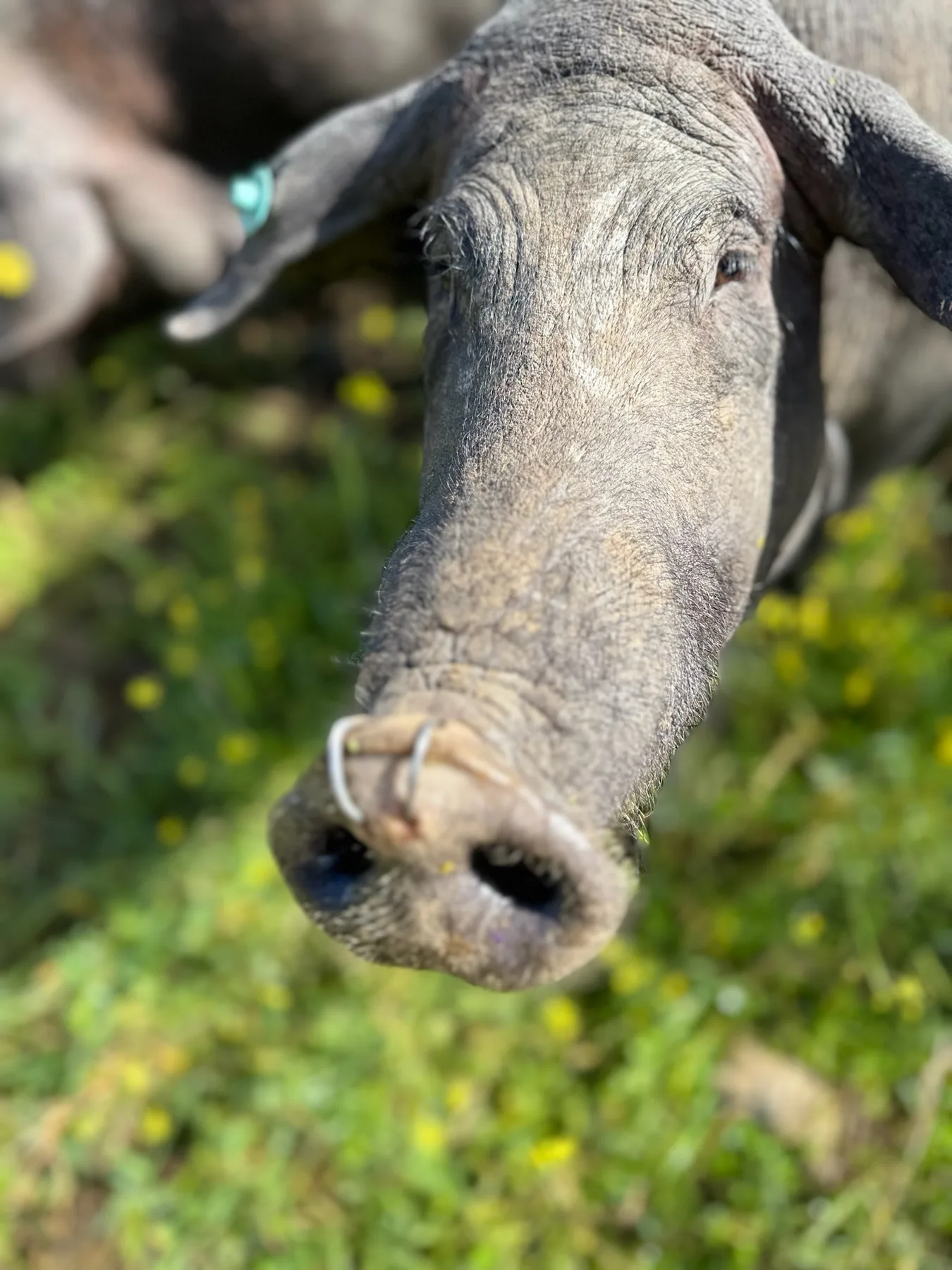
The snout that finds them
The four labels, and what they guarantee
Spain grades jamón ibérico by an official colour code. It states the breed, the diet and the rearing method. Here is how to read it.

⚪ White Label – Iberian Cebo
Iberian-breed pig (50 %) raised on the farm, fed on grains and legumes, with no access to pastures. ➡ At LA DULA: Jamón 26 months | Paleta 14 months
🟢 Green Label – Iberian Field Cebo
Raised outdoors in the dehesa for at least 60 days, on a mixed diet of pasture, natural resources and grains. ➡ At LA DULA: Jamón 30 months | Paleta 18 months
🔴 Red Label – Ibérico de Bellota
Raised free in the dehesa and fattened on acorns during the montanera. Spanish law allows 50 % or 75 % Iberian breed under this label; our range is 50 %. ➡ At LA DULA: Jamón 36 months | Paleta 24 months
⚫ Black Label – 100% Acorn-Fed Ibérico (Pata Negra)
The peak of the range: 100 % Iberian breed, raised in full freedom and fed exclusively on acorns. ➡ At LA DULA: Jamón 42 months | Paleta 24 months
👉 One point that is often confused: Spanish law sets the minimum curing time by the weight of the piece, not by the colour of the label — 24 months for a jamón of 7 kg or more, 20 months below that, and 12 months for any paleta. The durations above are what Cárnicas Pozas and Juan Pedro Domecq actually do, well beyond that minimum.
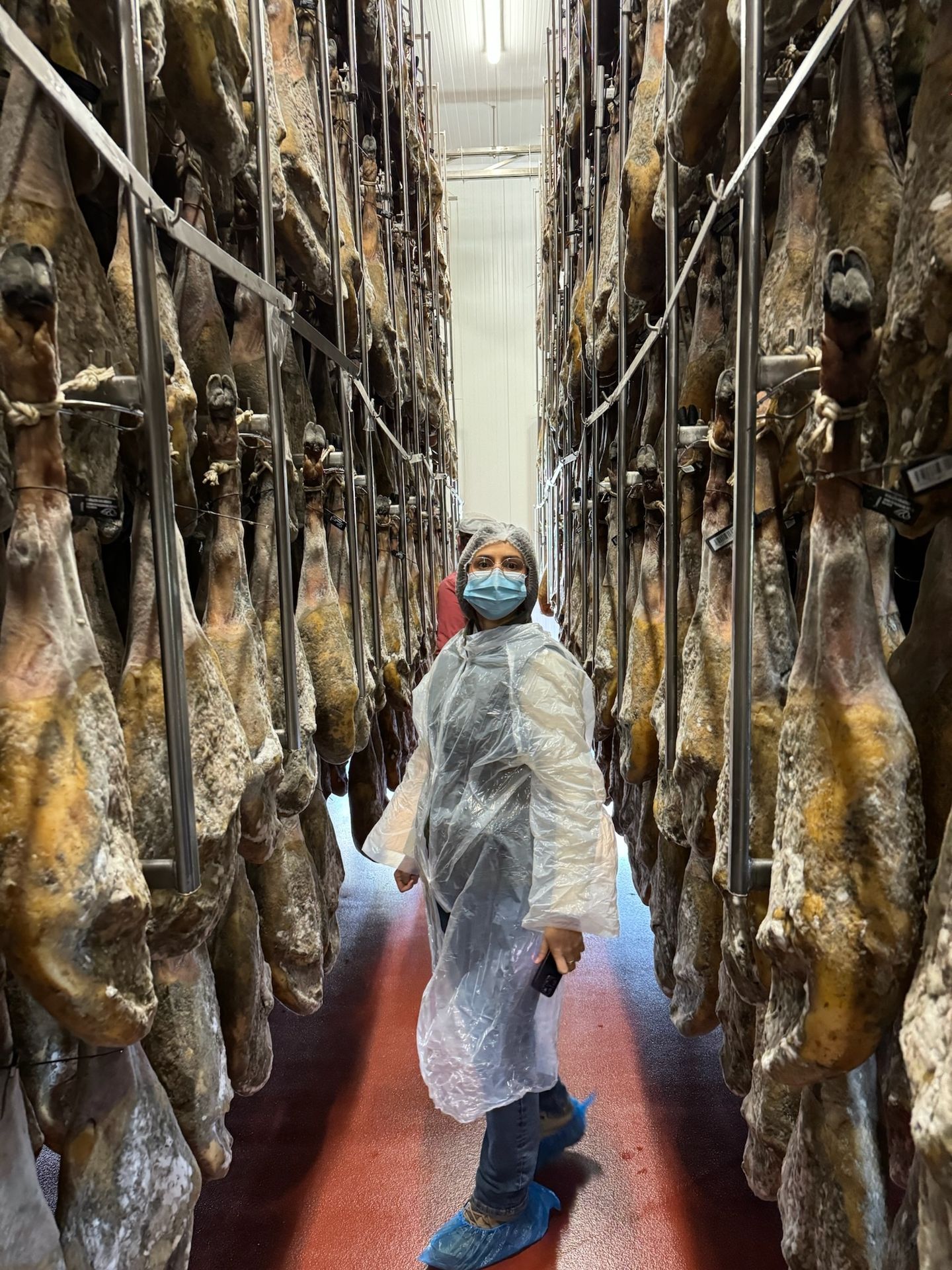
In Geneva
The last link in the chain
We buy whole pieces and we cut them here, to order. A ham loses its aromas within hours of being sliced. That is why we do it in front of you rather than months earlier in a factory.
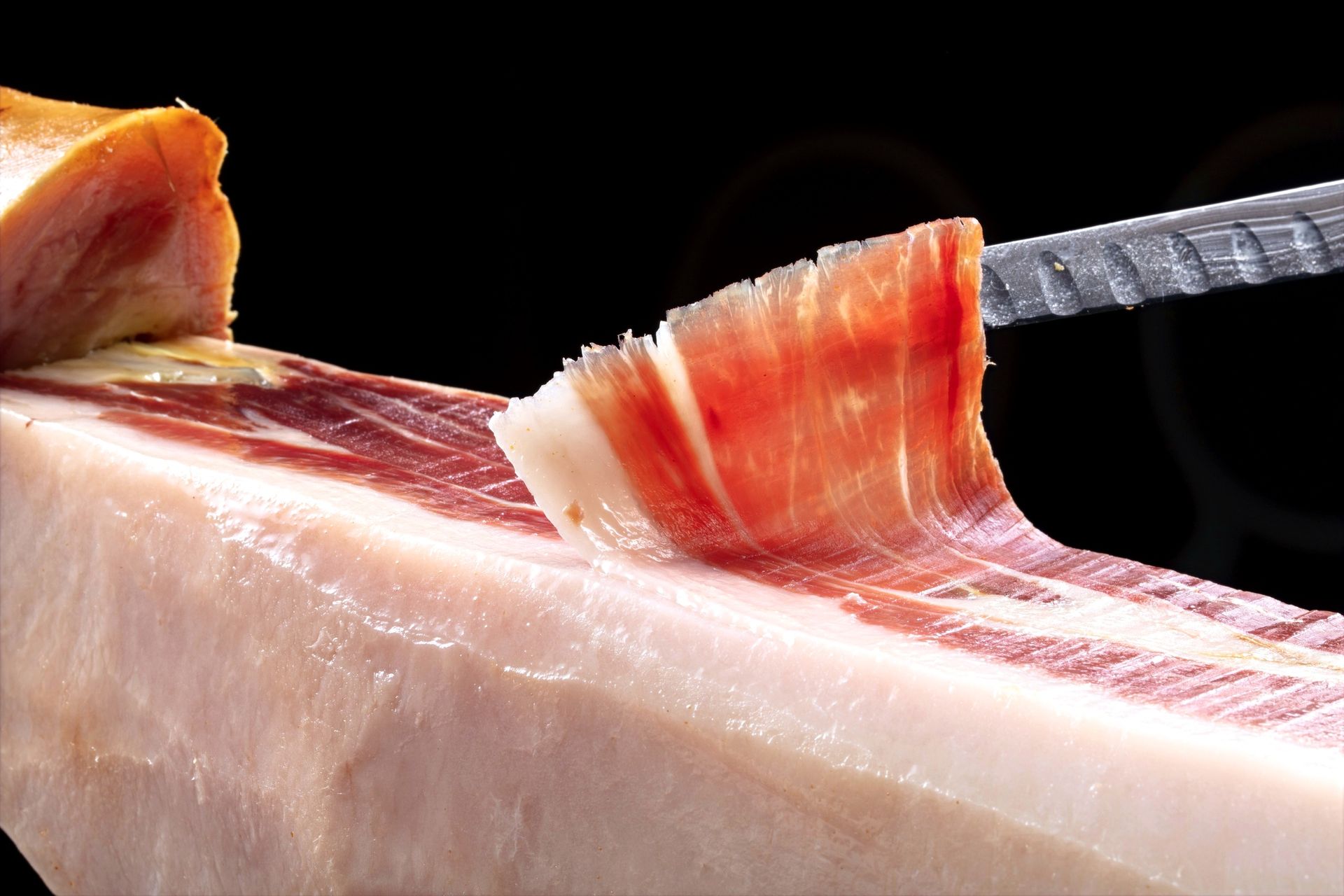
- THE LANGUAGE OF JAMÓN -
Every word on a label, explained
From Bellota to Pata Negra, via Cebo de Campo: jamón ibérico has its own vocabulary. We've gathered the essential terms in a full lexicon, so you can choose your jamón with total confidence.